
AI-powered Logistics
Orchestro.AI, a $30 million seed-stage startup focused on using AI to make logistics workflow efficient.
I led a 5+ member design team through an end-to-end strategic pivot, redefining the company vision.
Platform: Desktop + Web App
Team: Founders, Engineers, Data Scientist, Operations, Sales
Duartion: May 2024 - May 2025
System Thinking
Product Strategy
UX + UI
Prototyping
Context
Initially, the company pursued an
AI-driven unified logistics network.
AI-driven unified logistics network.
The vision was to stitch regional carriers into a nationwide network by standardizing logistics workflows.
Business model was two fold:
1. Commission of $0.4/parcel shipped from shipper
2. Subscription fee from each carrier member of the network
1. Commission of $0.4/parcel shipped from shipper
2. Subscription fee from each carrier member of the network
However, early execution exposed a fundamental issue that the model required high operational involvement and variable human compensation, resulting in negative unit economics.
Unified Logistics Network
The Problem
As the original idea plateaued, the company faced increasing ambiguity around its core product direction. Defining a new strategy required stepping back from existing assumptions and re-evaluating the problem space from first principles.
How might we leverage AI to improve logistics world?
This wasn’t a design problem—it was a product strategy & survival problem.
Solution
Identify a scalable AI product core in logistics.
This first-principles approach, helped systematically evaluating multiple directions against user value, trust, and unit economics.
Exploring how AI could reduce operational dependency while fitting naturally into existing logistics workflows. This meant evaluating multiple product directions, ranging from assistive tools to automation-driven systems against user value and economic scalability.
This structured exploration allowed us to move beyond incremental fixes and toward a focused, defensible product direction.
Idea 1: AI Chatbot
Explored as a quick & low-friction entry point to surface logistics information quickly.
While it improved access to answers, it remained detached from core workflows and did not meaningfully reduce effort or cost.
While it improved access to answers, it remained detached from core workflows and did not meaningfully reduce effort or cost.
Outcome: Improved access to information
Limitation: Fragmented value; did not integrate into core workflows or reduce operational load
Idea 2: Logistics Community
Evaluated for its potential to unlock peer-driven knowledge sharing and network effects. The model required sustained moderation and engagement investment, with returns that did not justify the operational overhead.
Outcome: Potential for peer-driven knowledge sharing
Limitation: High moderation and engagement cost; weak short-term ROI
Idea 3:Logistics Search Engine
Tested as a domain-specific search experience to accelerate insight discovery. Although useful for retrieval, the approach stopped at information delivery and lacked direct impact on task execution or workflow efficiency.
Outcome: Faster insight discovery
Limitation: Informational output without execution capability; low task completion impact
Idea 4: AI Agents
Investigated for end-to-end automation opportunities. Adoption signals were weak due to system complexity, low transparency, and limited user trust in delegating high-stakes logistics decisions.
Outcome: End-to-end automation potential
Limitation: Excessive complexity and low trust for operational users; poor adoption signals
Exploration 5: Logistics AI Tools
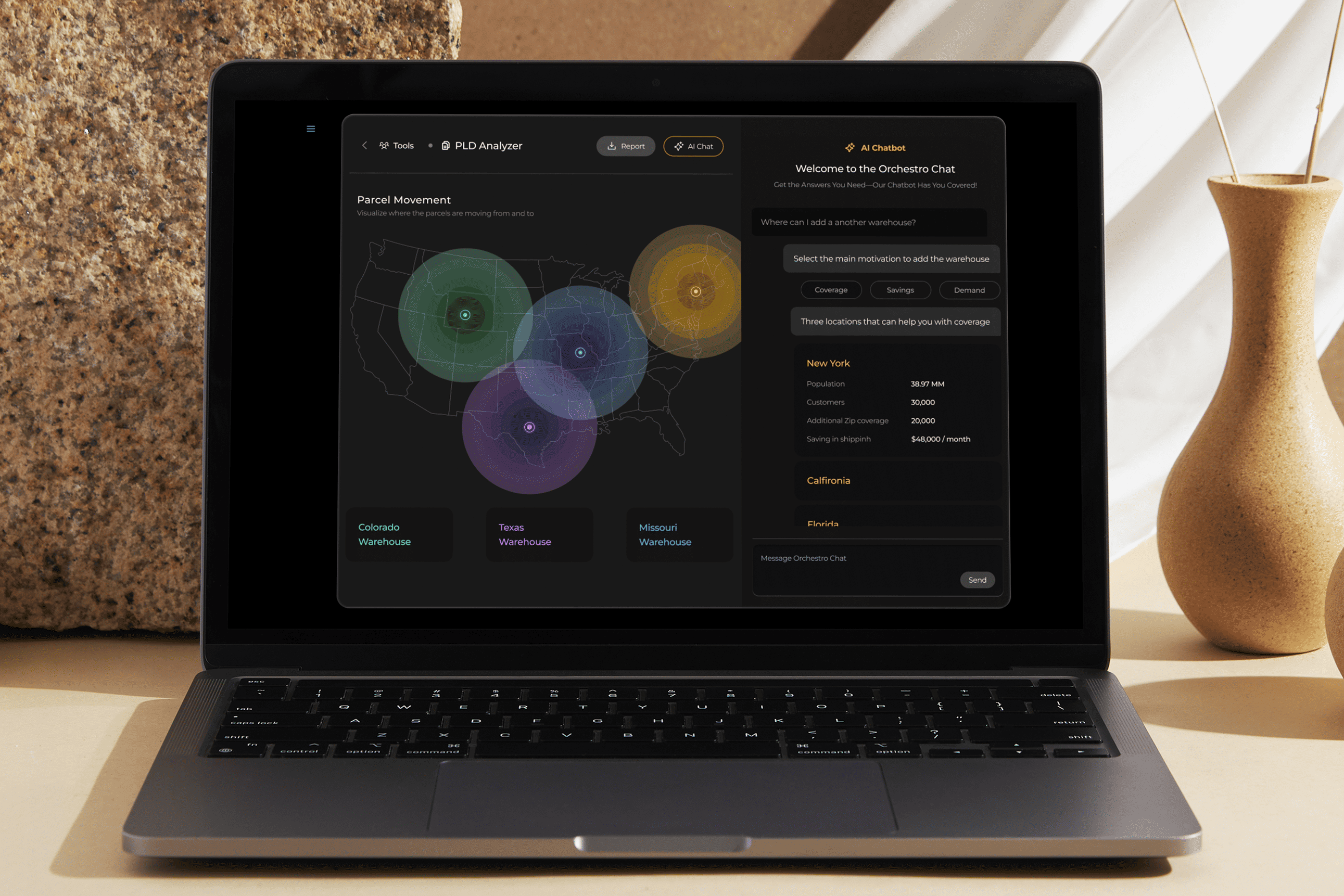
Task-based workflows where AI augments discrete logistics actions. This approach aligned with user mental models, reduced cognitive load, preserved control, and offered a scalable path with lower operational dependency.
Outcome: Provides fragmented value and can be stitched to form end-to-end workflow. User only pay for the task the need
Limitation: Fragmented value; integrate into core workflows or reduce operational load needed set up
Final Design
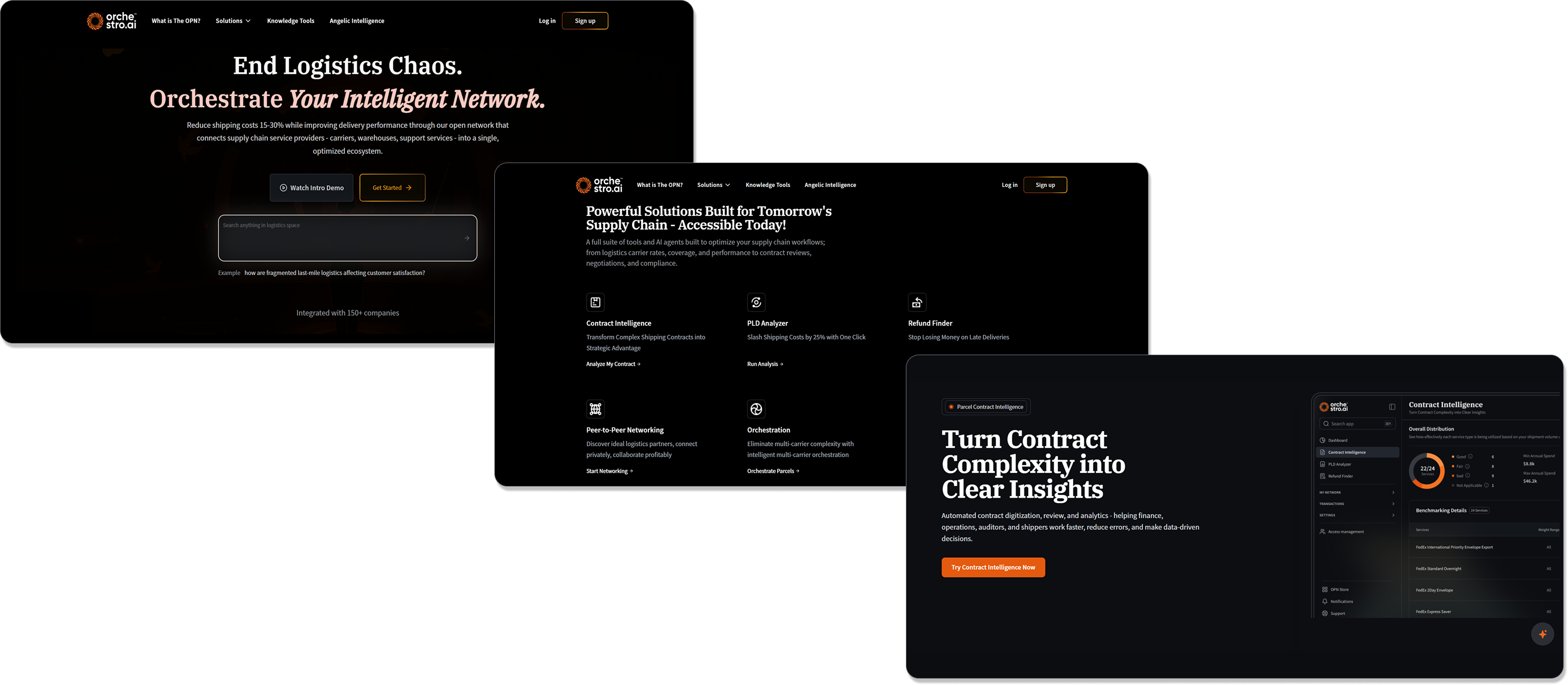
We converged on a task-based logistics workflow platform, where AI augments execution rather than replaces decision-making, combined with generative AI logistics-focused search engine.
Impact
$5 million+
successful fundraising validating confidence in the revised product
14 months
Company’s ability to remain operational post-pivot